
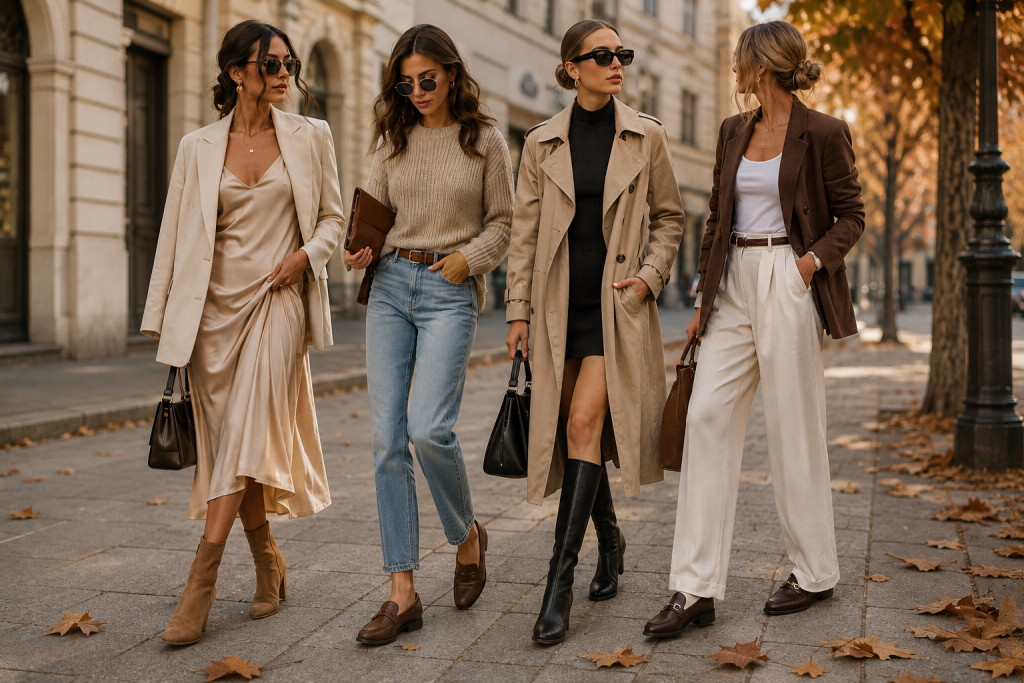
The transition between summer and autumn is one of the most exciting moments in fashion. The days can still feel warm and bright, while mornings and evenings begin to carry a noticeable chill. It is a season of change, and your wardrobe can reflect that beautifully.
As the seasons shift, knowing how to dress for unpredictable temperatures while still looking polished can be a challenge. Fashion expert Jelena Kulić shares her tips on how to master transitional dressing, from effortless layering and seasonal colour combinations to styling summer favourites in a fresh, autumn ready way.
Transitional fashion is not about putting away your summer clothes the moment September arrives. It is about finding new ways to wear them. The secret lies in layering, texture, colour and choosing pieces that can adapt to changing temperatures.
The Art of Layering
Layering is the foundation of transitional dressing. A lightweight layer can make a summer outfit instantly more appropriate for cooler weather without making it feel too heavy.
A classic blazer is one of the most versatile pieces you can have during this period. Wear it over a simple dress, combine it with jeans and a fitted top, or throw it over a skirt for a more polished look.
Lightweight trench coats are another timeless option. They add structure to an outfit while remaining practical enough for warmer days. For a more relaxed aesthetic, an oversized cardigan or a lightweight leather jacket can create the same effect.
Do Not Say Goodbye to Dresses Yet
One of the biggest mistakes when dressing for autumn is assuming that dresses belong exclusively to summer. Your favourite dresses can easily become part of your transitional wardrobe.
A floral midi dress can be styled with ankle boots and a structured blazer. A satin slip dress can be worn over a fitted long sleeve top or underneath an oversized jacket. Even a simple mini dress can take on a completely different character when paired with tights and loafers.
The idea is to change the styling rather than the dress itself.
The Return of Knitwear
Lightweight knitwear becomes especially useful during transitional weather. Fine knit sweaters, knitted polos, cardigans and sleeveless knit tops can be layered without creating too much bulk.
A neutral knit can also serve as the perfect bridge between summer and autumn. Think cream, beige, camel, grey and soft brown. These shades work effortlessly with both lighter summer colours and deeper autumn tones.
From Sandals to Loafers
Shoes can completely change the mood of an outfit.
As temperatures begin to fall, sandals can gradually make room for loafers, ballet flats, Mary Janes, sneakers and ankle boots. These styles instantly make an outfit feel more autumnal without requiring a complete wardrobe change.
Loafers paired with a flowing dress create an elegant contrast, while ankle boots can make a romantic summer skirt feel more structured and contemporary.
The New Season’s Colour Palette
There is no need to suddenly replace every bright colour in your wardrobe with black and brown. Transitional fashion works best when colours from different seasons are combined.
Soft pink looks beautiful with chocolate brown. Pale blue works surprisingly well with camel. Cream can be paired with almost anything, while burgundy can introduce an autumnal feeling without making an outfit look too heavy.
This is also the perfect moment to experiment with olive green, muted red, warm beige and deep chocolate tones.
Texture Becomes More Important
As temperatures change, texture becomes one of the easiest ways to make an outfit feel seasonal.
Combine satin with leather, cotton with knitwear, denim with suede or a lightweight dress with a structured jacket. Mixing textures adds depth to an otherwise simple outfit and creates a more sophisticated appearance.
This is particularly useful when the weather is still too warm for heavy autumn clothing.
The Return of the Blazer
If there is one piece that deserves a special place in every transitional wardrobe, it is the blazer.
A tailored blazer can make jeans and a simple T shirt look polished. It can give a feminine dress a more sophisticated edge and can even be worn with shorts during warmer days.
For a timeless wardrobe, neutral shades such as black, cream, grey, navy and camel are the easiest to style. Those who prefer a stronger fashion statement can experiment with oversized silhouettes, pinstripes or seasonal colours.
Accessories Can Change Everything
You do not need a completely new wardrobe every season. Sometimes changing the accessories is enough.
A structured handbag, leather belt, silk scarf, sunglasses or statement jewellery can completely transform an outfit. As autumn approaches, accessories in suede, leather and richer shades naturally make summer pieces feel more appropriate.
Scarves are particularly useful because they are both practical and stylish. A lightweight scarf can be carried throughout the day and added when temperatures drop.
Denim Gets a New Role
Denim becomes particularly important during the transition into autumn. Straight leg jeans, relaxed denim and darker washes can be paired with lightweight tops, blazers and loafers for an effortless everyday look.
For a more feminine approach, try combining denim with satin, lace or a fitted silhouette. The contrast between casual denim and delicate fabrics creates a modern balance.
Think in Outfits, Not Seasons
The most important rule of transitional fashion is to stop thinking of clothing as belonging exclusively to one season.
A summer skirt can work in autumn. A lightweight sweater can work in spring. A blazer can be worn almost all year round. Fashion becomes much more versatile when individual pieces are viewed as part of a larger wardrobe rather than being limited to a specific season.
The goal is to create outfits that can adapt throughout the day.
Transitional Fashion Is About Balance
The beauty of transitional dressing is its flexibility. You do not have to choose between summer and autumn. You can combine elements of both.
Wear a lightweight dress with boots. Pair tailored trousers with a simple tank top and blazer. Combine a summer skirt with a knit sweater. Add a trench coat to an otherwise minimal outfit.
The result should feel effortless rather than overly seasonal.
Ultimately, transitional fashion is about making the most of the clothes you already love while slowly introducing the textures, colours and silhouettes of the season ahead. It is a period where fashion becomes more creative, because there are no strict rules about what belongs where.
And perhaps that is exactly what makes the transition between seasons so stylish.