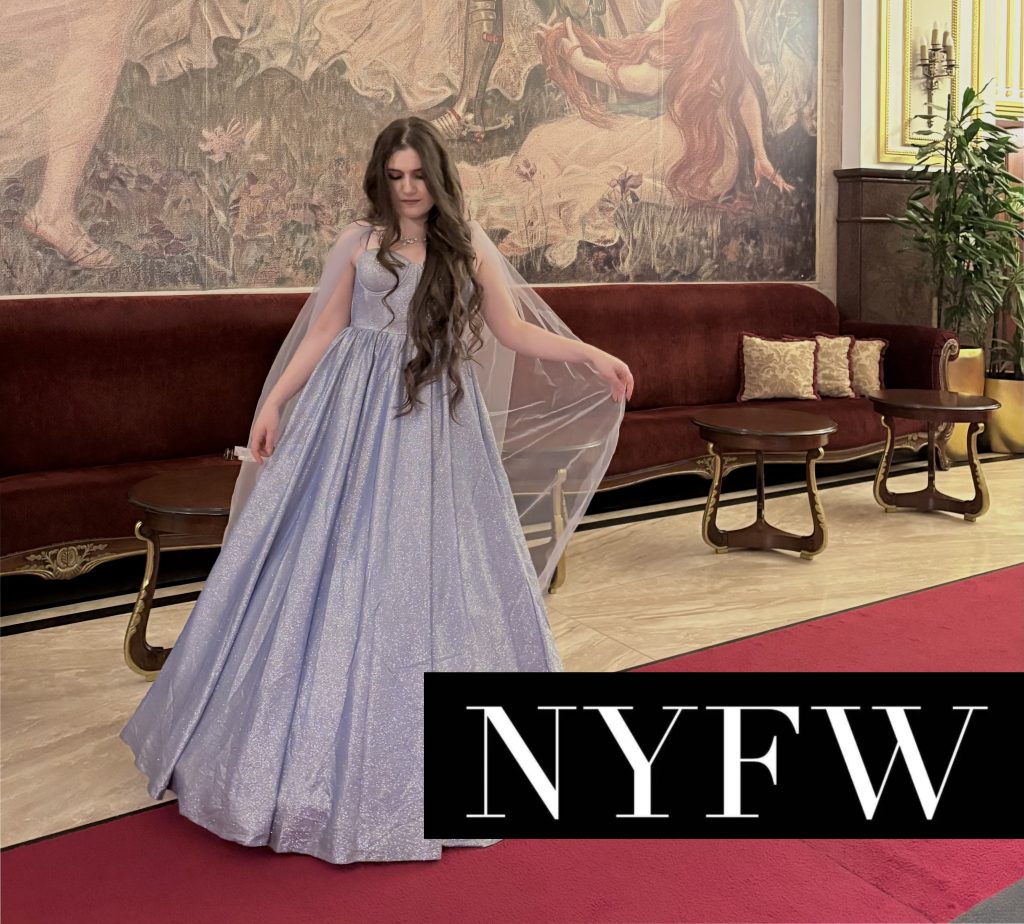
At New York Fashion Week, ANELLEJ by Jelena Kulic presented a collection of one of a kind handcrafted bags inspired by the visual world of 19th century Vienna. Imperial architecture, historic dress, jewellery, gardens and decorative arts became the foundation for a collection that explores how elements of the past can be transformed into contemporary objects.
For Kulic, the creative process began with research rather than a conventional seasonal theme.
“I knew that I wanted Vienna to be the starting point, but I never wanted to simply reproduce historical objects. I started researching the period almost detail by detail. I looked at architecture, interiors, gardens, dresses, jewellery and the craftsmanship behind them. The collection developed naturally from there,” Kulic explains.
From Schönbrunn to the Handbag
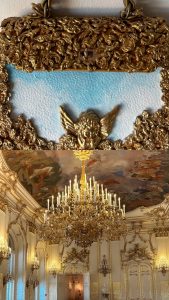
Schönbrunn Palace and its gardens became an important part of the collection’s visual language.
The elaborate interiors, gilded ornamentation, sculptural details and carefully composed gardens provided a wealth of references. Kulic was particularly drawn to the way decorative elements were integrated into architecture, turning functional spaces into elaborate artistic compositions.
That influence can be seen throughout the gold pieces in the collection. Dense floral surfaces, sculptural elements and ornamental borders recall the richness of historic Viennese interiors. Rather than reproducing individual architectural motifs, Kulic focused on their visual principles, including repetition, symmetry, dimension and an abundance of detail.
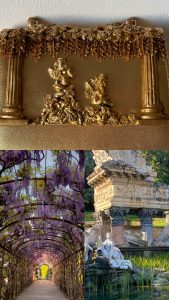
“One of the things that fascinated me most was how much attention was given to details that could easily have been purely functional. A wall, a frame, a column or a door could become a work of art in itself. I wanted to approach a handbag with that same mentality. It has a function, but that does not mean it cannot also be treated as an artistic object.”
Nature provided another source of inspiration. The carefully designed gardens of Schönbrunn, with their symmetry, flowers and ornamental compositions, influenced the botanical elements appearing throughout the collection.
Flowers emerge across the surfaces of the bags, sometimes densely layered and sculptural, creating a connection between the natural forms found in the gardens and the elaborate decorative language found inside the palace.
Sisi and the Art of Dressing
The world of Empress Elisabeth of Austria, widely known as Sisi, offered another important reference.
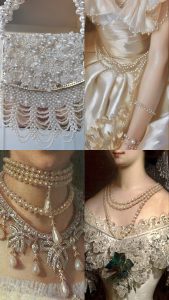
Her image remains closely connected to the visual identity of imperial Vienna. Portraits of Elisabeth reveal the extraordinary craftsmanship behind 19th century court dress, from expansive silhouettes and delicate fabrics to intricate jewellery, elaborate hairstyles and carefully considered embellishment.
Franz Xaver Winterhalter’s celebrated portraits of the Empress became part of Kulic’s wider research into the fashion and visual culture of the period.
“When you look at these portraits closely, there is always another detail to discover. You notice the construction of a dress, then the embroidery, the jewellery, the pearls, the hair ornaments. Nothing feels accidental. I wanted the bags to have that same quality, where you can look at them more than once and continue noticing something new.”
Pearls became particularly important within the collection.
Rather than appearing simply as jewellery inspired decoration, they become part of the construction and visual identity of the bags. Layers of pearls create texture across entire surfaces, while cascading strands reference the way jewellery interacted with elaborate evening dress.
The result transforms an element traditionally associated with jewellery into part of the architecture of the handbag itself.
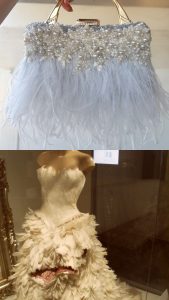
Feathers offer another interpretation of historic dress. Their softness and movement contrast with the structured form of the bag, recalling the elaborate use of texture and material seen throughout formal fashion of the period.
The Hand Behind the Object
Beyond the visual references, one of the most important connections between the collection and its historical inspiration lies in craftsmanship.
Each ANELLEJ bag is made by hand.
Individual embellishments are positioned and applied manually. Pearls, floral elements and decorative details are composed individually rather than reproduced as identical industrial patterns. The construction process therefore becomes part of the final appearance of every piece.
No two pieces are intended to be completely identical.
“For me, the fact that everything is made by hand is essential. I do not want every piece to look as though it came from exactly the same mould. When someone creates something by hand, there will always be a small detail that belongs only to that particular piece. I think that individuality is something worth preserving.”
This philosophy deliberately moves away from the uniformity of mass production.
Minute variations are not treated as imperfections to be concealed. Instead, they provide evidence of the process and of the person behind the object.
Fashion as Applied Art
It is here that the collection moves beyond historical inspiration and toward a wider conversation about applied art.
Applied art has long occupied the space where aesthetics and function meet. An object may serve a practical purpose while simultaneously becoming a vehicle for craftsmanship, design and artistic expression.
For Kulic, the handbag naturally belongs within that conversation.
“I have always loved the idea that art does not necessarily have to hang on a wall or exist behind glass. There can be art in something you wear, carry or use. A handbag has a practical purpose, but there is no reason why the process of creating it cannot be approached in the same way you would approach an artwork.”
That idea is reflected throughout the collection.
The gold surfaces reference architectural ornament. Floral compositions recall the gardens and decorative motifs of imperial interiors. Pearls evoke the jewellery and elaborate dress associated with the period. Feathers translate the movement and delicacy of historic garments into a contemporary accessory.
Yet none of these references are intended as literal reproductions.
Instead, fragments of 19th century Vienna are taken out of their original context and given a new purpose.
A detail once associated with architecture becomes a handbag surface. Jewellery becomes texture. Botanical forms become sculptural decoration. The material richness of a historical gown is reinterpreted through pearls and feathers.
“The goal was never to create historical bags. I wanted them to feel contemporary first. The history is there for someone who wants to look closer and understand where the details came from.”
Vienna Reinterpreted in New York
Presented at New York Fashion Week, the collection creates a dialogue between two cities and two different moments in time.
The artistic richness of 19th century Vienna provides the reference, while contemporary New York becomes the setting in which those ideas are given a new form.
What connects them is an emphasis on the object itself and on the value of craftsmanship.
ANELLEJ takes elements traditionally associated with architecture, jewellery, fashion and decorative art and brings them together within a single functional object.
The handbag remains something designed to be carried, but its function is only one part of its identity.
Each piece also carries the hours of handwork behind it, the historical references that informed it and the individuality that comes from creating an object only once.
In that sense, the collection proposes a contemporary interpretation of an old idea.
Art does not have to remain on the wall. Sometimes, it can be carried.