
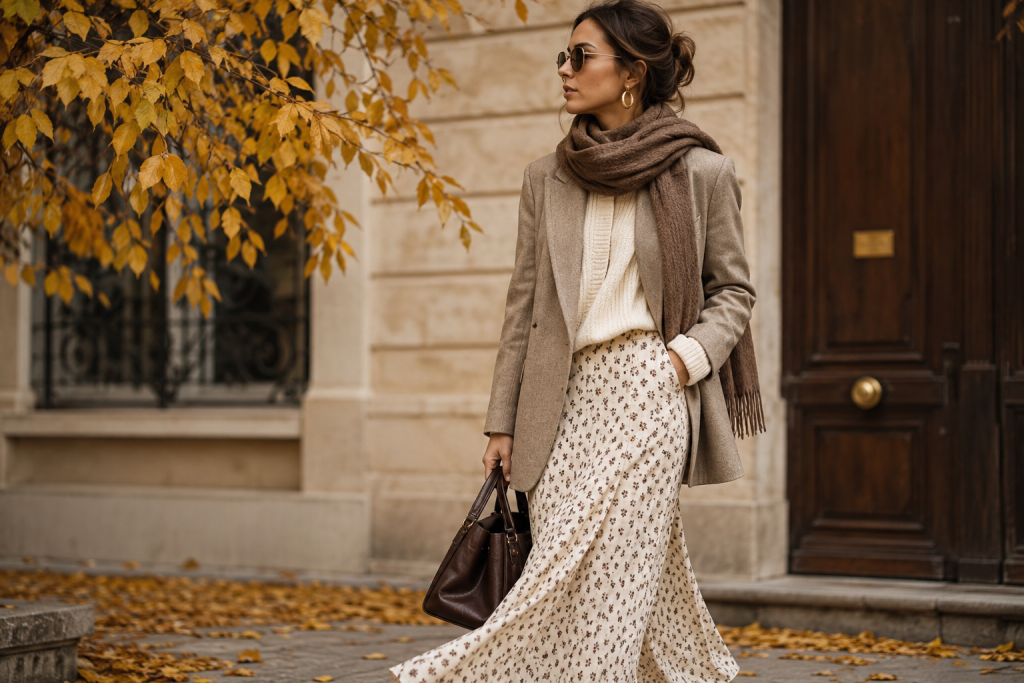
The arrival of autumn does not necessarily mean putting away everything you loved wearing during the warmer months. In fact, some of the most stylish fall outfits begin with pieces that were originally designed for summer. The secret is knowing how to layer, which textures to introduce and how to shift your color palette without completely changing your personal style.
Fashion expert Jelena Kulić believes that the transition between seasons is one of the best opportunities to become more creative with your wardrobe. Instead of treating summer and fall as two completely separate seasons, think of them as a continuation of one another.
With the right styling, your favorite summer dresses, skirts, shirts and even sandals can have a second life long after the temperatures begin to drop.
Keep Wearing Your Favorite Dresses
There is no reason to say goodbye to your favorite summer dress as soon as September arrives. One of the easiest ways to make a lightweight dress feel more appropriate for fall is to layer it.
A fitted knit underneath a sleeveless dress can create an entirely new silhouette, while a blazer or oversized cardigan worn over the top instantly adds warmth. For colder days, add tights and knee high boots and the same dress can take on a much more sophisticated autumn character.
The color of the dress can also make a difference. Soft summer shades can feel more seasonal when combined with deeper accessories such as chocolate brown, burgundy, espresso or black.
Style Skirts With Knitwear
Flowy midi and maxi skirts are some of the easiest summer pieces to carry into autumn. Their lighter fabrics create an interesting contrast when paired with heavier knitwear.
Try styling a satin skirt with a simple wool sweater or combining a printed skirt with a fitted knit. Tucking the sweater slightly into the waistband can help define the waist and create a more balanced silhouette.
For footwear, loafers, ankle boots or knee high boots can instantly make the combination feel more autumnal.
Give the White Shirt a New Role
A lightweight white or cream shirt may have been a summer staple, but it can become an important layering piece once temperatures begin to fall.
Wear it underneath a blazer, cardigan or sleeveless knit, allowing the collar and cuffs to remain visible. It can also be layered underneath a summer dress to create a completely different outfit.
For a more relaxed look, leave the shirt slightly open over a fitted top and combine it with dark denim and boots.
Bring in Autumn Textures
One of the simplest ways to make a summer outfit feel appropriate for fall is to introduce richer textures.
Leather, suede, wool, cashmere and heavier cotton immediately add visual warmth. You do not necessarily need to replace your entire outfit. A suede bag, leather belt or wool coat can be enough to transform a lightweight dress or simple blouse.
Texture is especially important when wearing neutral colors. Mixing different materials can make an otherwise minimal outfit look much more luxurious and considered.
Layer Instead of Replacing
The art of transitional dressing is really the art of layering. Rather than putting away your summer pieces and immediately reaching for heavy winter clothing, gradually introduce additional layers.
A blazer over a dress, a cardigan over a camisole or a lightweight coat over a skirt can help you adapt to changing temperatures while keeping your existing wardrobe in rotation.
Layering also gives you more styling possibilities. A single summer piece can look completely different depending on what you wear underneath or over it.
Turn Sandals Into a Styling Statement
On warmer early autumn days, there is no need to immediately abandon your favorite sandals. Minimal leather sandals can work beautifully with transitional outfits, particularly when paired with tailored trousers, a blazer or a lightweight knit.
As temperatures drop, gradually replace them with loafers, ballet flats, ankle boots or knee high boots.
The goal is not to follow a strict seasonal rule but to dress according to the weather while allowing your wardrobe to evolve naturally.
Add a Structured Jacket
A structured jacket can make almost any summer piece feel more suitable for autumn.
A tailored blazer works beautifully with dresses and skirts, while a leather jacket can give a feminine summer outfit a slightly edgier character. A cropped jacket can also work particularly well with high waisted trousers and longer skirts by creating a more defined silhouette.
Choose neutral shades if you want maximum versatility, or introduce a deeper autumnal color for a stronger seasonal statement.
Change Your Accessories
Sometimes you do not need to change the clothes at all. Changing the accessories can completely alter the impression of an outfit.
Swap a woven summer bag for a structured leather handbag. Replace delicate sandals with loafers or boots. Add a belt, silk scarf or statement jewelry and suddenly a familiar summer combination can feel completely new.
This is also an easy way to experiment with fall trends without committing to an entirely new wardrobe.
Experiment With Color
Summer wardrobes often revolve around whites, creams, pastels and brighter shades, while autumn naturally invites deeper colors. The transition does not have to happen overnight.
Try combining your lighter summer pieces with richer autumn tones. A pale blue dress can look beautiful with chocolate brown accessories. A cream skirt can be paired with burgundy knitwear, while a soft floral print can be grounded with a camel coat and dark leather shoes.
This approach allows you to keep wearing the colors you love while gradually introducing a more autumnal palette.
Make Denim Your Foundation
Denim is one of the easiest ways to connect summer and fall dressing. A favorite pair of jeans can be styled with almost every piece in your transitional wardrobe.
Pair them with a lightweight blouse while the weather is still warm, then introduce knitwear, blazers and coats as temperatures fall. Darker denim can also instantly make an outfit feel more polished and seasonal.
For a particularly effortless look, combine dark jeans with a cream sweater, brown leather accessories and a structured coat.
The Transitional Wardrobe Is About Creativity
The best transitional outfits are not necessarily the ones that follow the most fashion rules. They are the ones that make the most of what you already own.
As Jelena Kulić explains, personal style becomes especially visible during transitional seasons because dressing is less predictable. You can combine lighter fabrics with heavier textures, summer colors with autumn shades and feminine pieces with more structured layers.
Instead of seeing the end of summer as the end of your favorite wardrobe pieces, see it as an opportunity to style them differently.
A summer dress can become an autumn dress. A lightweight skirt can become part of a sophisticated layered look. A simple shirt can become the foundation of countless outfits.
Ultimately, transitioning your wardrobe is not about starting over every season. It is about looking at familiar pieces from a new perspective and discovering how much more they can offer.