
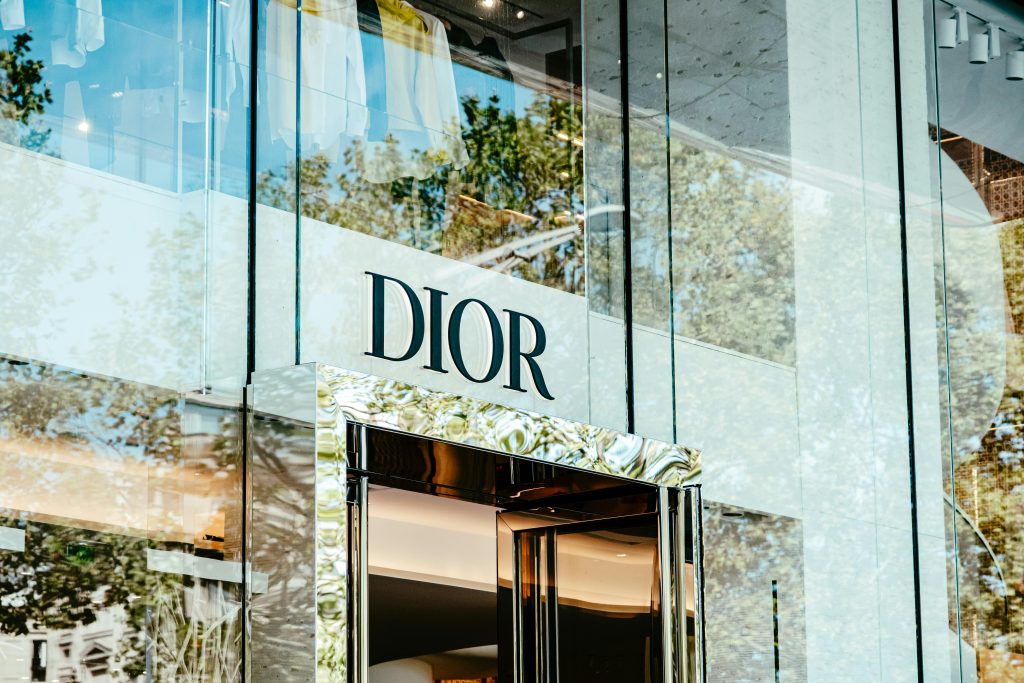
By the Editorial Team of FranceFashion.fr
When we talk about fashion, few names hold as much significance, enduring appeal, and sheer cultural power as Christian Dior. He was much more than just a designer; Dior marked a pivotal moment in modern fashion. It was a time when elegance gained a fresh definition, Paris triumphantly reclaimed its position as the world’s couture hub, and feminine style was utterly transformed through his groundbreaking silhouettes, innovative structures, and boundless imagination.
Even now, close to eighty years since the Dior fashion house first opened its doors, the brand continues to be a dominant force in the worldwide luxury sector. Today, as the fashion industry navigates profound shifts – encompassing sustainability, digital advancements, and evolving customer preferences – Dior isn’t merely reacting. Instead, it’s actively playing a pivotal role in shaping what lies ahead.
Authored by the FranceFashion.fr Editorial Team, this piece will delve into Christian Dior’s captivating history, trace the brand’s development since its founder’s era, and outline the strategic path it’s charting towards 2026. This outlook is grounded in its well-established brand identity, prevailing industry currents, and all its publicly shared commitments
Christian Dior Before Dior: An Artistic Mind in a Changing World
Christian Dior came into the world in 1905, in Granville, Normandy, born into a well-to-do family. His early years were deeply infused with an appreciation for art, lush gardens, grand architecture, and the inherent grace of his surroundings – influences that would later become the very foundation of his distinctive style.
Though initially encouraged to pursue a diplomatic career, Dior felt a stronger pull towards the arts. In the late 1920s, he opened his own art gallery in Paris, proudly showcasing works by giants like Picasso, Dalí, and Giacometti. While financial difficulties eventually led to its closure, this period profoundly shaped Dior’s creative vision.
Before launching his own iconic fashion house, Dior honed his skills as an illustrator and designer for well-known couturiers such as Robert Piguet and Lucien Lelong. These developmental years allowed him to sharpen his understanding of structure, proportion, and the very essence of what made something truly elegant.
By the mid-1940s, Europe was slowly recovering from the war. Fashion at the time was purely practical, fabrics were scarce, and clothing lines were quite simple and constrained. Dior was about to challenge all of it.
1947: The New Look and a Fresh Start for Femininity
On February 12, 1947, Christian Dior unveiled his debut collection at 30 Avenue Montaigne in Paris. The impact was instant and revolutionary.
Featuring softly rounded shoulders, a dramatically cinched waist, flowing full skirts, and an undeniably feminine silhouette, the collection presented a complete departure from the strict wartime practicality. Carmel Snow, the influential editor-in-chief of Harper’s Bazaar, famously christened it the “New Look” — a name that would come to define an entire era.
The New Look was far more than just a fashion statement. It was:
A cultural rebirth after years of hardship.
A powerful reassertion of Parisian fashion leadership.
A massive commercial triumph that breathed new life into the French garment industry.
Christian Dior understood that fashion transcended mere clothing; it was about sparking emotion, fostering optimism, and fulfilling aspirations. In doing so, he forever transformed the relationship between women and what they wore.
Building a Global Fashion House
Dior’s first collection was a massive hit, and he quickly started expanding his brand. By the early 1950s, Dior had transformed into a global powerhouse. He pioneered licensing, letting his brand branch out into accessories, perfumes, and ready-to-wear clothes – a truly forward-thinking move for that era.
What made Dior’s approach so special was its blend of:
Unparalleled high fashion
Clever brand building
And a real knack for understanding what modern customers craved
Then, in 1957, at the absolute peak of his career, Christian Dior unexpectedly passed away at just 52 years old. The future of his fashion house seemed uncertain, but Dior had already created something far bigger than himself.
Dior’s Legacy: How It Kept Going and Evolved
The story of Dior didn’t end there; it was all about keeping that creative spirit alive and constantly reinventing itself. When Yves Saint Laurent, a mere 21-year-old at the time, was named the new creative head, it really kicked off a brand new chapter for Dior – one without its founder. His very first collection was a huge hit with critics, clearly showing that the brand could change and grow while still staying true to its core identity.
Through the years, Dior has been shaped by many talented designers, each one adding their own unique chapter to its story:
Marc Bohan, who introduced quiet sophistication and a steady hand
Gianfranco Ferré, with his structural designs that echoed Dior’s original vision
John Galliano, who injected drama and over-the-top storytelling
Raf Simon, who brought back sleek simplicity and thoughtful design
Maria Grazia Chiuri, the very first woman to head up Dior’s women’s collections
This knack for reimagining its signature style while always staying true to its core identity has truly become one of Dior’s biggest strengths.
Dior in the 21st Century: A Pillar of Global Luxury
Nowadays, Christian Dior stands as one of the most influential fashion houses within the LVMH Group, which is, of course, the world’s foremost luxury collective. While precise financial details aren’t shared publicly, Dior is regularly considered among the most valuable high-end brands across the globe.
However, Dior’s impact reaches far beyond just its financial earnings. The brand truly shines where fashion meets culture, where its rich heritage merges with fresh innovation, and where exceptional craftsmanship connects with a worldwide audience. Through impressive exhibitions, exciting partnerships, and its famously elaborate runway presentations, Dior has established itself as both a premier luxury label and a significant cultural landmark.
Maria Grazia Chiuri and the Evolution of Dior’s Narrative
Ever since Maria Grazia Chiuri took the helm at Dior in 2016, she’s really transformed the brand’s creative direction. Her time there has been notably defined by a strong focus on:
Feminism and female empowerment
Deep historical research and a fresh reinterpretation of Dior’s archives
Collaborations with contemporary women artists
Catchy slogans, powerful symbolism, and clever intellectual nods have also become central to the message Dior sends on the runway. While her approach has certainly stirred up some conversation, it’s undeniably broadened the brand’s cultural relevance and attracted a whole new generation of customers.
Ultimately, Chiuri has encouraged Dior to view fashion as a powerful form of dialogue – not just about aesthetics, but about social commentary as well.
Dior Men: Redefining Masculinity in Luxury
Dior’s men’s fashion line has seen a pretty major shift recently. Moving past its super formal tailoring, Dior Men is now all about a much more fluid and contemporary take on what male style can be.
This change really mirrors some wider cultural shifts we’re seeing:
The way casual streetwear is blending with high-end fashion.
Men feeling more comfortable expressing their identity.
And the rise of a younger, digitally connected audience.
The outcome is a menswear range that feels genuinely modern, very appealing, and perfectly aligned with what luxury consumers globally are looking for.
Dior and Sustainability: A Strategic Imperative
The high-end fashion world is currently grappling with various environmental and ethical concerns. In response, Dior has openly committed to the sustainability efforts spearheaded by its parent company, LVMH. Importantly, Dior is careful to avoid simply *saying* it’s green for marketing; instead, their approach centers on making genuine, lasting changes within their operations, rather than just relying on catchy slogans.
They’ve made significant promises in several key areas, including:
Ethically obtaining their basic ingredients.
Making sure they can track products better throughout their entire journey.
Cutting down on their carbon footprint.
*Using more environmentally friendly packaging.
Looking ahead, by 2026, Dior aims to fully embed these guiding ideas into all aspects of their business. The goal is to find a good balance between being kind to the planet and maintaining their famously high quality.
Preserving Craftsmanship in a Globalized World
At its core, Dior is deeply committed to the art of craftsmanship. They’re constantly expanding and modernizing their workshops across France and Europe, working to ensure these intricate haute couture techniques continue to be passed down to future generations.
This dedication is evident in their training programs, their partnerships with independent artisans, and in-house development initiatives. It all stems from Dior’s conviction that true luxury is fundamentally built on talent, patient effort, and the irreplaceable human touch.
Especially in today’s world of mass production, this unwavering dedication to meticulous craftsmanship truly makes Dior stand out.
Digital Innovation and the Luxury Experience
Looking ahead to 2026, Dior is truly weaving digital advancements into the very fabric of its strategy. The idea isn’t to replace the charm of its physical boutiques, but rather to genuinely uplift and enrich how clients experience the brand.
This commitment shows up in several ways: we’ll see captivating store environments, incredibly tailored services, stronger connections with customers built on clever insights, and thoughtfully designed digital stories.
Crucially, Dior isn’t just chasing after every new tech fad. Instead, they’re quite discerning and mindful about how they adopt technology, making sure that every innovation deepens emotional appeal, sparks longing, and upholds that distinctive sense of luxury.
Dior in 2026: Strategic Outlook
Considering the current landscape of the luxury industry and Dior’s strong position within it, the brand’s strategic direction towards 2026 appears to be built on a few core pillars.
This involves embracing a more ethical and open approach to luxury, fostering a deeper connection between culture, art, and fashion, and significantly enhancing the client experience through innovative solutions. They also plan to continue expanding their global presence, all while carefully managing their exclusive appeal.
Ultimately, Dior’s main challenge won’t be staying relevant; instead, it will be finding that crucial balance – preserving its distinctive identity while skillfully navigating and responding to our rapidly evolving world.
Dior as a Timeless Yet Forward-Looking House
Christian Dior himself once famously said, “A fashion designer is like a conductor leading an orchestra, and the workshops are the musicians.” This foundational belief continues to guide the brand even today.
From the groundbreaking “New Look” of 1947 to its forward-thinking plans for 2026, Dior consistently represents sophisticated French style, clever design, and a significant cultural influence. It’s not a brand dwelling on past achievements, but one that’s always moving forward.
In a fashion world often driven by quick trends and grand spectacles, Dior thrives by understanding what truly makes something luxurious: giving it time, deep meaning, and a clear purpose.







I was very pleased to find this web-site.I wanted to thanks for your time for this wonderful read!! I definitely enjoying every little bit of it and I have you bookmarked to check out new stuff you blog post.