
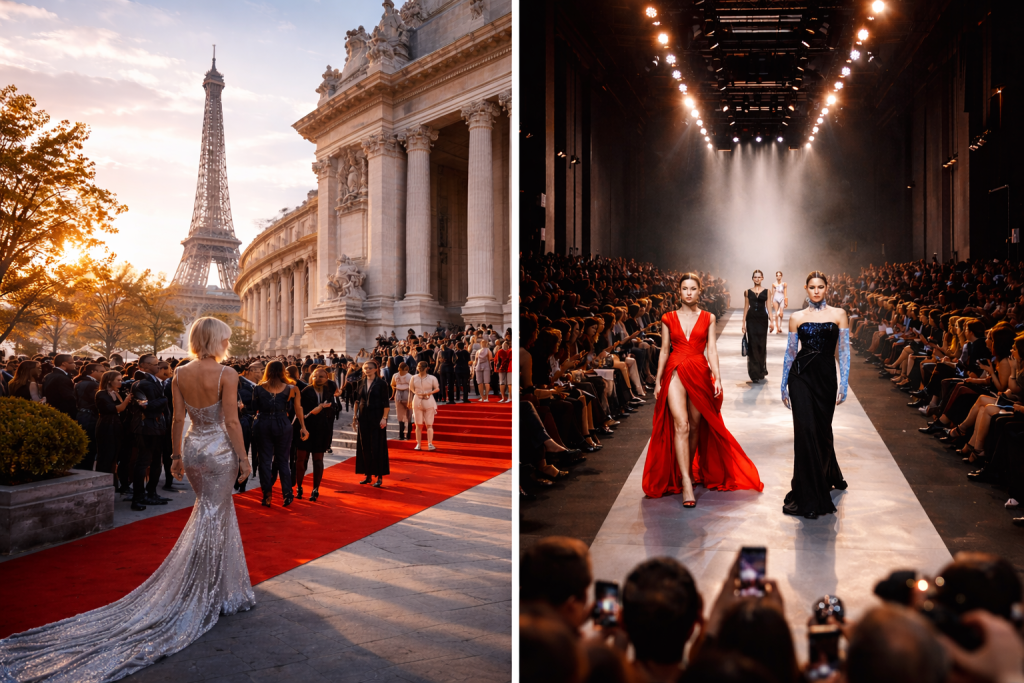
Paris Fashion Week is one of the most awaited fashion events in the world. Within the span of nine days, the top fashion brands present their latest designs to the world. This offers the audience a glimpse into a world that is full of elegance, creativity, and style. However, the question that needs to be asked here is how fashion has continued to hold our attention as it did in the past. What does it leave behind as a legacy? This was the topic of discussion at a forum led by Nathan Devers. The participants were Émilie Hammen, historian of art and fashion at Paris 1 Panthéon-Sorbonne and director of the Galliera Museum; Christian Louboutin, the famous French designer of luxury shoes and handbags; and novelist Christine Orban.
Fashion Between Art and Commerce
The term “fashion” is often used loosely, but it carries a variety of different meanings. It might mean a popular trend followed by many, but it might also mean a type of artistic expression. Fashion brings together design, material, and color to create a shape and express an idea. At the same time, it is a useful item—a garment to wear every day. However, the key concern is: is fashion a work of art or a product of commerce?
Another debate centers on the role of fashion with respect to society: does it give individuals the power to express themselves and seek freedom, or does it dictate rules to encourage conformity?
The Spectacle of the Fashion Show
Fashion Week is known for the impressive fashion shows held during the event, where the objective is to deliver a memorable experience. Christian Louboutin explains that his shows are less about the presentation of the collection and more about the transmission of the atmosphere. To him, joy is essential, and he incorporates dance and celebratory aspects to ensure a lively ambiance.
Christine Orban highlights the potential for innovation while being true to one’s identity, as seen with the major fashion houses. Fashion brands such as Chanel or Dior continue to reinvent themselves while maintaining the stylistic integrity that has been associated with them.
Nevertheless, the way the audience receives these performances has seen a revolutionary change with the advent of the social media era. Although the audience of the runway show remains exclusive, the images and videos are transmitted instantly on the internet. According to Émilie Hammen, the fashion show was first introduced to the world in the early twentieth century, but the current digital platforms have enabled a wider audience, especially the younger generation, to witness the fashion show in real time.
Fashion: Between the Eternal and the Temporary
The contrast between the ephemeral and the eternal has always been a hallmark of fashion. According to Charles Baudelaire’s essay *The Painter of Modern Life* published in 1863, modernity lies in the ability to find something eternal in the transitory. Fashion can be said to embody the zeitgeist while at the same time revealing deeper layers of symbolisms.
According to Christian Louboutin, there are certain aspects of fashion that are beyond the realm of the temporary. For instance, the red sole of his brand of shoes symbolizes the power of the color red. This color symbolizes a lot in most cultures.
At the same time, what is out of fashion can reveal a lot of information about a particular era. According to Émilie Hammen, what is out of fashion reflects the social, cultural, and political values of a particular era.
Fashion as a Language
French philosopher Roland Barthes characterized fashion as a language that has a grammar of its own. This implies that clothing conveys a message in the public sphere. A good example is the famous “revenge dress” of Princess Diana. This is a black dress that she wore in response to the British royal family.
It is therefore possible to make a connection between fashion and feminism. Hammen explains that clothing often makes social issues manifest. Hammen, however, argues that women have been the driving force in the transformation of the concept of freedom through the use of fashion.
Very good i like it